 TEL: +86-316-6060333
Closed cell elastomeric foam rubber is one of the most commonly used flexible insulation materials.It is widely specified for HVAC, refrigeration, and commercial building projects around the world. Foam rubber is often referred to as one general material, but it actually includes many product variations.It comes in many versions :different surfaces, different forms, and extra features for different environments.Choosing the right foam rubber variant for your project makes a real difference.It affects energy efficiency, condensation control, installation quality, and long‑term reliability.This article provides an overview of foam rubber types, their key properties, and typical field applications.Whether you're an engineer, contractor, or developer, this guide will help you pick the right materials.
What is Foam Rubber Insulation?
Foam rubber insulation, known as NBR elastomeric foam, is a flexible closed cell insulation made of nitrile butadiene rubber compound. During production, the foaming process is carefully controlled.This process creates dense network of sealed micro cells throughout the material. This closed cell structure is very important, differentiating from open fiber insulation. KingFlex foam rubber is made in ISO 9001 certified automated production lines.This ensures consistent quality across large export orders.
Core Inherent Properties of Quality Foam Rubber
All high performance foam rubber products share certain basic properties.These make them perform well in applications.
Low thermal conductivity: Stable thermal conductivity λ ≤0.032 W/(m·K) , effectively reduces heat transfer in both chilled and heated piping systems.
That means less energy wasted and lower bills .
High water vapour resistance: Built in water vapour resistance factor (μ ≥15 000) grants against moisture ingress. That means in most indoor installations, additional vapour barrier facings are not required.
Broad operating temperature range: This material performs reliably from 50°C to +105°C.This makes it suitable for both low‑temperature refrigeration circuits and medium temperature heating lines.
Flexibility & form fitting performance: The foam is soft and flexible to fit tightly around pipes, elbows, tees, and valve bodies without no gaps.That means less risk of heat loss at joints and connections.Sound dampening capability: This foam does more than insulate ,it also weaks sound and calms vibration.So you get less noise from airflow and less resonance from pipes .Fire safe performance: If it does catch fire,it offers low smoke emission and self extinguishing properties in the event of fire.
Long term durability: The material offers good resistance to humidity, thermal cycling, and aging.This means longer service life .
Main Foam Rubber Product Varieties
The product differ in physical form and surface cover.The underlying closed‑cell rubber compound provides consistent performance .
l Plain foam rubber is the most common type. It has two basic forms: tubes for round pipes, and sheets for ducts or irregular surfaces.Both are designed for indoor use:ceiling cavities, mechanical equipment rooms, and enclosed plant areas where insulation doesn't exposed.
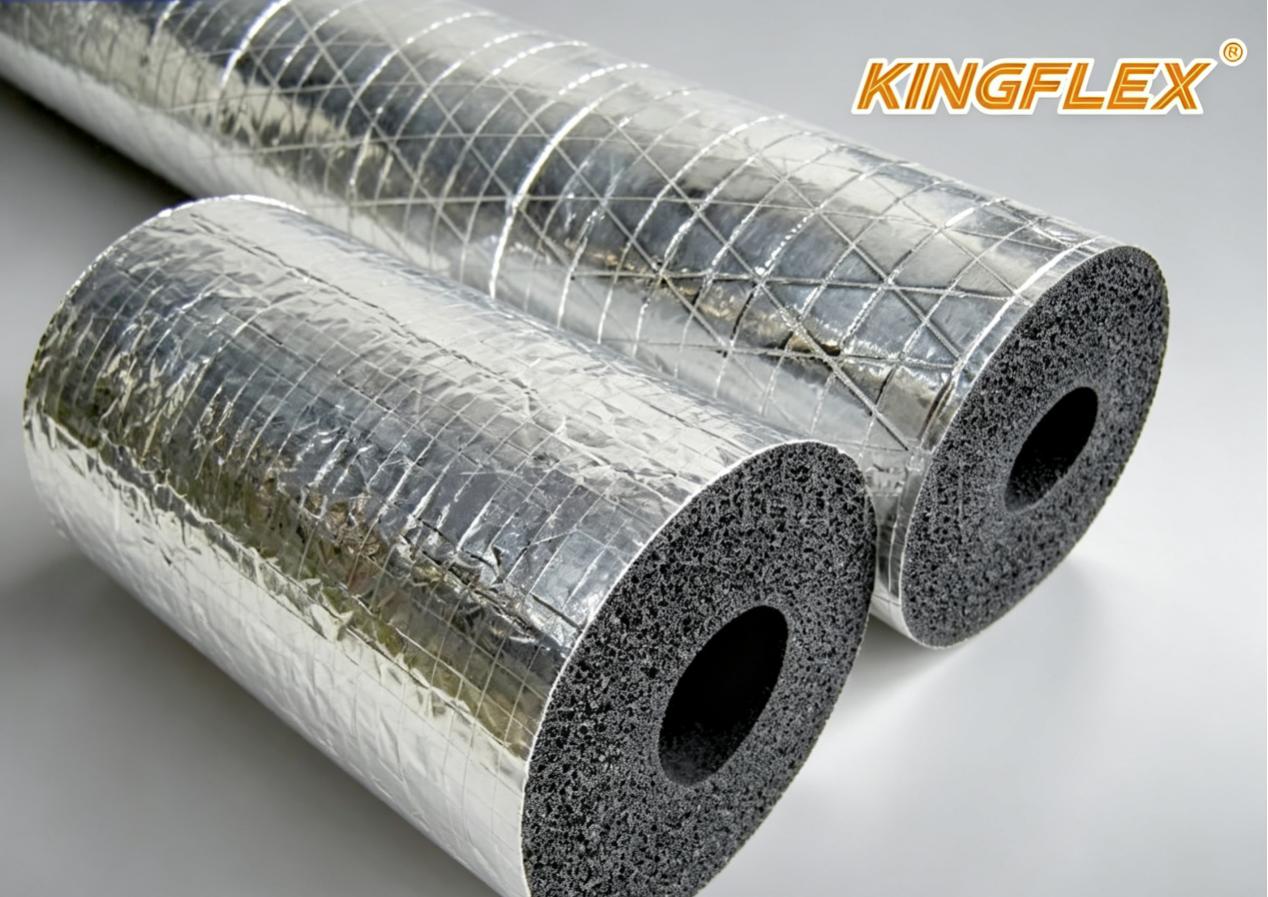
l Aluminum foil faced rubber foam uses the same foam rubber , but with aluminium foil bonded.The foil gives extra protection against sunlight and harsh weather .So it's good for outdoor pipes, roof.
l Pre made foam rubber fittings such as elbows, tees, and end caps, are made from the same foam material.These save you the time of cutting and shaping on site.They fit perfectly and leave no gaps, even on awkward pipe shapes.
l Accessory supporting system .We also supply the right adhesives and sealing tapes to fit the foam rubber.These help you seal joints properly on site, blocking ability stays intact.
Typical Applications of Foam Rubber Insulation
Because foam rubber offers a good balance of useful properties, it's used in a wide range of projects.
l Chilled water piping and refrigerant lines in commercial HVAC systems
l Air handling ducts for office buildings, shopping complexes and hospitals
l Refrigeration and cold storage facility piping for food processing and warehouses
l Mechanical systems in hospitals and crowd public buildings
l Rooftop and outdoor exposed pipe runs (using foil faced variants)
l Industrial process cooling pipelines requiring flexible, condensation
Practical Guidance for Specifying Foam Rubber
When choosing foam rubber varieties for a project, evaluate these practical factors:
l Is the installation indoor or outdoor, requiring UV protective foil facing?
l Operating temperature range of the pipe or duct media.
l Local ambient humidity levels and condensation risk.
l Project fire safety code.
l If your project has complex pipework with many elbows and tees, pre made fittings are worth considering – especially for large volumes.